Inside the Sabian Cymbal Factory
A few years ago, I had the opportunity to tour the Sabian cymbal factory in Meductic, New Brunswick, with my two sons.
Both are drummers, so getting a behind-the-scenes look at where Sabian cymbals are made was a pretty special experience.


Mark Love, Master Product Specialist at Sabian, showed us around the factory and introduced us to some of the people behind the instruments. I brought my camera along and photographed the different stages of production as we made our way through the facility.
I won't attempt to explain exactly how a Sabian cymbal is made. There was a lot to take in, so I'll just settle for sharing some of my favourite photographs from the tour.
Heat and Water
One of the first things that stood out was just how physical the process is. Heat plays an important role in working the metal, followed by cooling the cymbals in water.
It was also one of the more interesting parts of the factory to photograph, with the heat, machinery and industrial surroundings providing a very different environment from the photography I normally do.


Lathing
Lathing removes material from the surface of a cymbal and helps create its final shape, thickness and sound characteristics. Watching it happen also gives you a completely different appreciation for the familiar grooves you see when you pick up a finished cymbal.


Hammering
Hammering is another important part of shaping the sound of a cymbal. Some of the work we saw was done by hand by people who have spent years developing their craft.
For me, this was less about documenting every technical step and more about photographing the people, tools and details involved in making something that musicians eventually see as a finished instrument.


Hole punching
One of the more memorable stops was with Johnny, who punches the holes found in some Sabian cymbals.
He also did something my boys definitely weren't expecting. He took a couple of the small pieces of metal punched from the cymbals and turned them into medallions for them.
That was easily one of the highlights of the visit for the kids.


Adding the Sabian Name
Near the end of the process, the familiar Sabian branding, model names and other markings are applied to the cymbals.
After seeing all the work that comes before it, this is the point where the pieces of metal we'd been following through the factory really begin to look like the cymbals you'd recognize in a music store or behind a drum kit.

A Lot of Music History
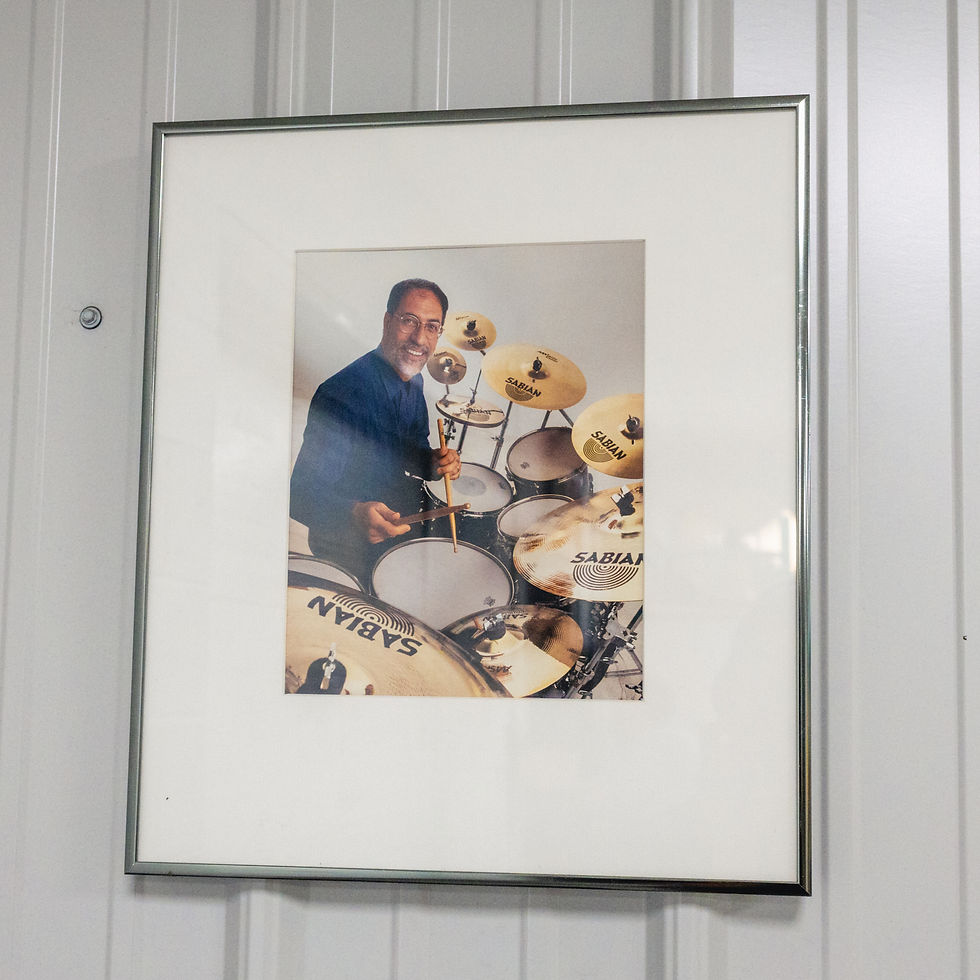
There was plenty to see beyond the manufacturing floor. Photographs throughout the facility showed some of the well-known drummers who have played Sabian cymbals over the years, including Neil Peart of Rush, Mike Portnoy of Dream Theater and Chad Smith of the Red Hot Chili Peppers.
Our visit came shortly after the death of drummer and educator Dom Famularo. It was a little surreal to see a custom China cymbal Sabian had been developing with him, still marked simply with “Dom’s China Master” in Sharpie.

A Different Kind of Photo Shoot

I went into the factory primarily as a visitor with my family, but I'm glad I brought the camera.
Factories and workshops are fascinating places to photograph. There are people working with their hands, machinery, textures, repetition and all kinds of small details that are easy to overlook when you're focused only on the finished product.
Seeing a Sabian cymbal being made from much earlier stages through to the finished instrument gave all of us a new appreciation for what goes into something my kids and countless other musicians simply know as part of their drum kit.
And for me, it made for a pretty great afternoon of photography.

Thanks to Mark Love and the folks at Sabian for their warm welcome and for faciliting this tour for us!